Net Zero 2050
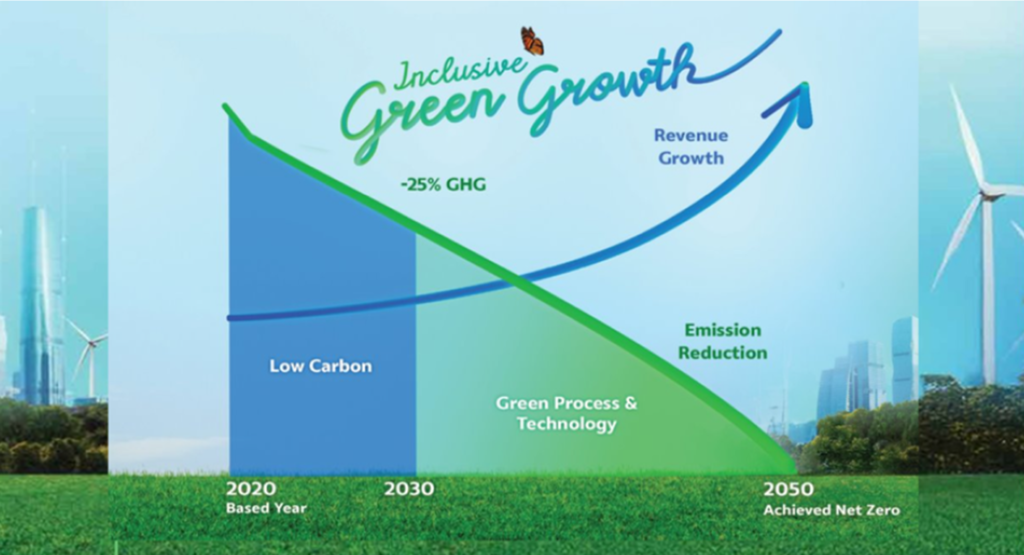
SCG is firmly on the path toward achieving Net Zero greenhouse gas emissions by 2050 and is working towards its targets, validated by the Science Based Targets Initiative (SBTi), to reduce direct and energy-related emissions (Scopes 1 and 2) by 25% by 2030 compared to a 2020 base year, and cut value chain emissions from fossil fuel sales to external customers (Scope 3) by at least 25% by 2031 against a 2021 base year. To drive these goals, SCG has adopted the Marginal Abatement Cost Curve (MACC) as a tool for prioritizing decarbonization projects based on their business value and decarbonization potential. Using this tool, projects are categorized into three groups: 1) Do Now, which are cost-effective and ready for immediate implementation; 2) To Decide, which are technologically ready but require supporting factors to be investment-worthy; and 3) Decide Later, which represent high-potential projects awaiting future technological maturity or more favorable pricing.
SCG Net Zero Roadmap
Operational Strategies
| Strategy | Key Actions |
| 1) Process and Technology Transformation Decarbonizing production through alternative energy, energy efficiency optimization, and the development of low-carbon products. | • Increase the ratio of alternative fuels, such as RDFs and biomass. • Expand the use of renewable energy. Improve the efficiency of kiln systems and core production processes. • Develop low-carbon cement. • Study and monitor emerging technologies, such as CCUS, hydrogen, and electrification. |
| 2) Analyzing Transition Risks and Opportunities Utilizing insights into policy, technology, and market trends to ensure precise decarbonization strategies and investments. | • Analyze the impact of carbon mechanisms, such as CBAM and ETS. • Assess market demand for low-carbon products. • Utilize the ESG Data Platform and MRV systems for strategic planning. |
| 3) Cost-Effective Resource Allocation Applying the MACC to prioritize projects that deliver fast, cost-effective, and high-yield carbon reductions. | • Categorize projects into Do Now, To Decide, and Decide Later projects. Invest in initiatives that provide rapid carbon reduction at a lower cost. |
| 4) Collaboration with the Supply Chain Partners and Industrial Peers Elevating systemic sustainability by working with suppliers, customers, communities, and industrial peers. | • The supplier decarbonization program. • The Saraburi Sandbox – low-carbon city model. Public-Private-People Partnerships (PPPP). • Collaborate with customers and business partners to develop low-carbon materials. |
Outcomes
In 2025, SCG achieved a total greenhouse gas (GHG) emission reduction of 29.06 million tCO2e, representing a 15.14% decrease from the 2020 base year. These results were driven by various key measures, including energy efficiency optimization, an increased share of alternative fuels, and high-efficiency process improvements. Consequently, SCG’s GHG emission intensity relative to revenue stood at 58.48 tCO2e per million baht.
The key mechanism include:
1. Increasing the use of alternative Fuels (AF) such as RDF and biomass, which help reduce reliance on coal and supports the circular economy. In 2025, the AF share acconted for 23% of total thermal energy consumption.
2. Expanding Renewable Energy (RE) usage, including electricity generated from Waste Heat Generation: WHG from the production process and solar power. Together, these sources accounted for 21% of total electricity consumption.
3. Improving Energy Efficiency (EE) through continuous enhancement projects, particularly in cement kiln and main facility in production plant.
Regarding low-carbon product development, SCG successfully increased the penetration rate of low-carbon cement in Thailand to 82%. Simultaneously, the implementation of a comprehensive Measurement, Reporting, and Verification (MRV) system across all domestic and international plants has enhanced the accuracy, transparency, and reliability of climate-related data, ensuring full alignment with international disclosure standards.
“Do Now” Investments
In 2025, as a result of the adoption of the MACC tool, SCG moved forward with a ‘Do Now’ projects, selecting those that meet investment return criteria, which including energy efficiency, alternative fuel substitution, and production process optimization, resulting in a total potential GHG reduction of 469,809 tCO2e per year with a CAPEX of 1,750 million baht.
Saraburi Sandbox
The Saraburi Sandbox is a pioneering Public–Private–People Partnership (PPPP) in which SCG has played an active role to transform Saraburi, a major cement production hub, into a low-carbon city model. This initiative serves as a testing ground for the transition to a low-carbon economy across five key dimensions:
1) transitioning to clean and sustainable energy, 2) promoting green industries and eco-friendly products, 3) waste-to-value management, 4) supporting low-carbon agriculture, and 5) expanding green spaces.
The Saraburi Sandbox utilizes an ‘Area-based Approach’ as a prime example of how sustainability goals can be balanced with Nature Positive and Inclusive Society outcomes. This model not only reduces emissions and restores biodiversity but also enhances the quality of life and economic opportunities for the local community, serving as a blueprint for an industrial cluster-level transition that can be scaled to other areas.
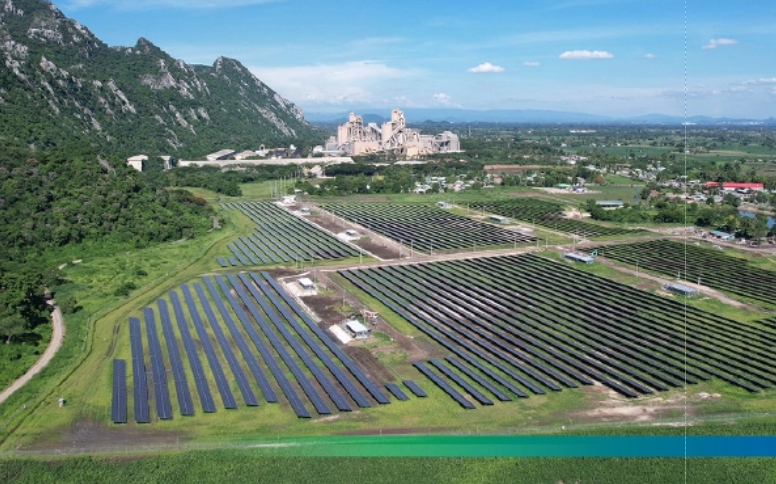
In 2025, SCG, in collaboration with public sector, private sector partners, and civil society, formulated strategic plans and advanced a range of initiatives under the Saraburi Sandbox Project, as outlined below:
1. Accelerating clean energy transition A White Paper was prepared and submitted to the Cabinet to promote the “Saraburi Sandbox” as a national pilot area for greenhouse gas emissions reduction. The initiative supports the adoption of clean energy, including solar power, renewable energy from biomass, and refuse-derived fuel (RDF), in alignment with Thailand’s NDC 3.0 commitments.
2. Fostering green industry & green products Thailand’s cement industry successfully elevated the Thai Industrial Standard for hydraulic cement (TIS 2594-2567) to a mandatory standard, replacing Portland cement (TIS 15). Thai Cement Manufacturers Association (TCMA) has also collaborated with several international organizations to develop transition pathways toward a green cement industry. Notably, the Mobile Carbon Capture Unit project, supported by the Government of Canada, is currently undergoing a feasibility study to capture flue gas emissions from cement plant in Thailand, with pilot implementation expected in 2026.
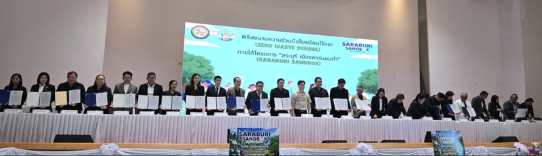
3. Turning waste into value SCG, in partnership with Saraburi Provincial Administrative Organization and the Saraburi Provincial Education Office, implemented the “Zero Waste School” program across 13 schools. The initiative focuses on waste reduction at source, waste segregation, and maximizing resource utilization to create added value. SCG directly supported 5 schools: Anuban Saraburi School (Mueang Saraburi District), Anuban Wihan Daeng School (Wihan Daeng District), Jamrat Wittaya School (Wang Muang District), Tha Luang Cement Thai Anusorn Technical College (Ban Mo District), and Ban Nong Phak Nok School (Muak Lek District).
4. Promoting low-carbon agriculture SCG collaborated with the Saraburi Provincial Agriculture Office to promote the adoption of the “Alternate Wetting and Drying (AWD)” rice cultivation method to reduce greenhouse gas emissions. Support was also provided for packaging development of “Saraburi Eco-friendly Rice,” produced through AWD practices, to enhance product value and expand market opportunities in partnership with the Tha Chang Subdistrict Community Rice Center Enterprise (Sao Hai District, Saraburi Province). Furthermore, under a PPPP framework, the Sustainable Sugarcane Leaf Burning Reduction Project was implemented in Wang Muang District. The project supports shredding and baling equipment for sugarcane leaves, enabling agricultural residues to be used as alternative fuel in the industrial sector. This initiative helps reduce open-air burning, mitigate PM2.5 pollution, and generate supplementary income for local farmers.
5. Increasing green spaces SCG has strengthened the network of 45 community forests across Saraburi Province while enhancing local livelihoods through knowledge exchange and shared experiences among community forest networks. Activities include reforestation of expanding green areas and the promotion of biodiversity within community forests to serve as food sources and income-generating assets for local communities. Building upon the unique strengths of each community forest, eco-tourism initiatives have been further developed in collaboration with the Saraburi Tourism Association, including the capacity building of certified “forest bathing guides” and the organization of forest bathing activities to raise awareness of forest conservation while generating local income.
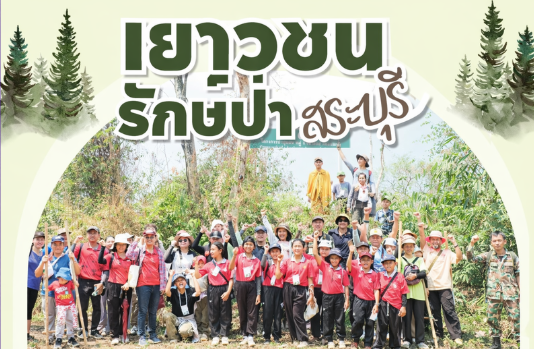
In addition, SCG partnered with Ban Khlong Rabang Community Forest to organize the “Saraburi Youth Forest Conservation” program, encouraging youth participation in forest stewardship. Technical support was also provided to Ban Tham Nam Phu and Ban Muak Lek Nai Community Forests in preparing project proposals to secure funding from the Environmental Fund under the Ministry of Natural Resources and Environment, resulting in total approved funding of THB 4.16 million. SCG and its network partners also launched the “Sustainable Community Water Management Project, Saraburi Province” aimed at developing participatory water management systems covering water storage, utilization, and resource management to mitigate the impacts of droughts and floods. The project is being piloted in Muak Lek and Kaeng Khoi Districts.
6. International Recognition The Saraburi Sandbox initiative, driven through the PPPP model, was selected by the World Economic Forum as one of the 10 initiative projects in ASEAN and was featured in the World Economic Forum Annual Meeting 2026 in Davos, Switzerland.