Partnership Synergy Towards Sustainability
Achieving sustainable development and accelerating the transition toward a low-carbon economy requires collaboration across sectors. Recognizing this, SCG actively fosters partnerships with governments, businesses, financial institutions, academia, and civil society organizations to co-create solutions that address complex environmental and economic challenges.
One of the key platforms that embodies this collaborative approach is the ESG Symposium, which brings together leaders and experts from diverse sectors to exchange perspectives, develop policy recommendations, and drive concrete actions toward sustainable transformation.
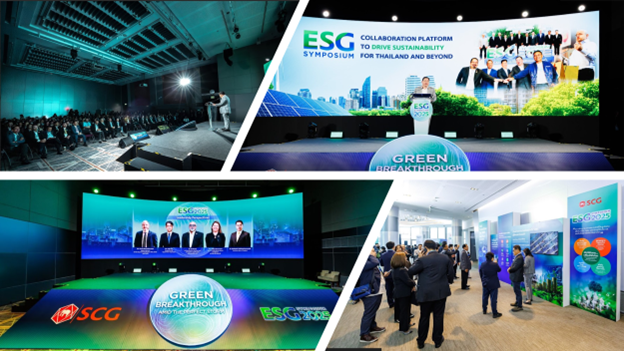
Driving Collective Action through ESG Symposium
The ESG Symposium 2025, held under the theme “Green Breakthrough amid the Perfect Storm – Accelerate with Green, Survive Together,” convened policymakers, industry leaders, financial institutions, academia, and international organizations to address the pressing challenges of climate change, energy security, and economic competitiveness.
The symposium featured keynote perspectives from global and national leaders, including:
- Public sector – Bank of Thailand, Government agencies responsible for energy, economic development, and climate policy
- Private sector – Leading companies from energy, manufacturing, technology, and supply chain industries
- Financial institutions – Banks and financial organizations supporting green investment and sustainable finance
- Academia and research institutions – International universities and research organizations such as MIT
- International and civil society organizations – United Nations agencies and sustainability networks working on climate and development issues
The presence of stakeholders from across these sectors underscores the shared responsibility required to drive systemic change and accelerate the transition toward a low-carbon economy.
Deep-Dive Discussions on Key Transition Agendas
Prior to the ESG Symposium, a series of focused sessions were convened to enable in-depth discussions among policymakers, industry leaders, financial institutions, and experts on key structural issues that are critical to Thailand’s transition toward a low-carbon economy while maintaining long-term economic competitiveness.
These discussions centered on two strategic agendas: Energy Transition and Just Transition for SMEs, both of which play a crucial role in shaping Thailand’s sustainable economic future.
Insights and recommendations from these discussions were subsequently consolidated into a White Paper, which presents policy recommendations and practical pathways to support Thailand’s transition toward a competitive low-carbon economy. The White Paper was developed to contribute to national dialogue and provide constructive inputs for government agencies in shaping policies that enable sustainable economic transformation.
1. Energy Transition
One of the central discussions of the symposium focused on Energy Transition, which is critical for Thailand’s competitiveness and climate commitments.
The session brought together policymakers, energy experts, and industry leaders to explore pathways for transforming Thailand’s energy system toward a cleaner, more flexible, and resilient model.
Participants emphasized the need to:
- modernize energy infrastructure
- expand renewable energy adoption
- enable private sector participation in clean energy markets
- strengthen regional energy cooperation
Through collaborative dialogue among government agencies, energy providers, and industry stakeholders, the discussion explored mechanisms such as renewable energy trading, direct power purchase agreements (Direct PPA), and grid access reforms, which can accelerate clean energy deployment while ensuring energy security and affordability.
2. Strengthening SMEs for a Just Transition
Another key session addressed Just Transition for SMEs, recognizing that SMEs play a vital role in Thailand’s economy and supply chains.
The session brought together representatives from government agencies, financial institutions, large corporations, and SME organizations to explore strategies for enhancing SME resilience and competitiveness in the green economy.
Participants highlighted several priority areas:
- improving access to sustainable finance
- strengthening digital and green capabilities
- enabling technology transfer and innovation
- expanding market access through supply chain partnerships
By fostering collaboration among businesses, policymakers, and financial institutions, the session underscored the importance of building an ecosystem that enables SMEs to adopt sustainable practices while maintaining economic competitiveness.
Building Resilience through Multi-Sector Collaboration
Beyond mitigation efforts, the symposium also highlighted the importance of climate adaptation. With climate risks becoming increasingly complex and unpredictable, collaboration across sectors is essential to develop data-driven solutions that enhance resilience for communities, industries, and infrastructure.
Experts emphasized the importance of integrating technological innovation, policy frameworks, and community participation to strengthen climate resilience and improve disaster preparedness.
Expanding Collaboration Across ASEAN
Recognizing that sustainability challenges extend beyond national boundaries, SCG has expanded the ESG Symposium platform to foster regional collaboration across ASEAN. This initiative aims to facilitate knowledge exchange and strengthen partnerships among policymakers, businesses, and communities in accelerating the transition toward a low-carbon economy across the region.
A notable example is ESG Symposium 2025 Indonesia, held in Jakarta under the theme “Decarbonizing for Our Sustainable Tomorrow.” The event brought together representatives from government, industry, and civil society to exchange perspectives on decarbonization pathways and circular resource management in the industrial sector.
During the event, SCG and partners signed the “PPPP – Circular Future Collaboration and Commitment: Declaration for Greener Tomorrow,” under the Public–Private–People Partnerships (PPPP) framework. This collaboration involved government agencies, industrial companies, and community representatives working together to accelerate carbon reduction and expand circular economy practices in Indonesia.
The partnership includes organizations such as PT Semen Jawa, local authorities from Sukabumi Regency, community representatives from SCG Warrior Mentari, and leading Indonesian companies including PT Pratama Abadi Industri, PT Glostar Indonesia, PT Pou Yuen Indonesia, PT Feng Tay Indonesia Enterprises, PT Panasonic Gobel Life Solution Manufacturing Indonesia, and PT Tirta Fresindo Jaya (Mayora). The collaboration focuses on developing waste separation and management systems, strengthening circular economy practices in industrial and community areas, and reducing greenhouse gas emissions.
Through initiatives such as this, ESG Symposium serves as a platform for translating sustainability dialogue into practical collaboration. By sharing knowledge and adapting solutions to the economic structures and policy contexts of each country, SCG aims to support the development of inclusive and practical pathways toward a low-carbon economy across ASEAN.
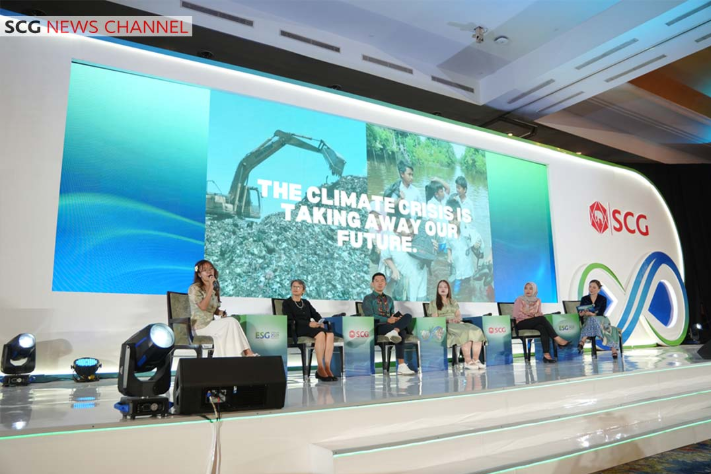
Partnership for Sustainable Growth
Through platforms such as the ESG Symposium, along with collaborative initiatives with partners across multiple sectors, SCG continues to foster partnerships that drive systemic change and support sustainable development at the organizational, industry, and societal levels. These collaborations are closely aligned with SCG’s sustainability strategy, which focuses on advancing Inclusive Green Growth and accelerating the transition toward a low-carbon economy.
By connecting stakeholders from diverse sectors and regions, these partnerships help advance key strategic priorities for SCG, including:
- Accelerating energy transition to support SCG’s Net Zero commitments and reduce greenhouse gas emissions
- Strengthening SME capabilities within the supply chain to enhance competitiveness and enable a just transition
- Fostering innovation and sustainable investment to develop solutions that support the green economy and long-term growth
- Enhancing climate resilience through collaborative efforts that integrate technology, data, and policy frameworks
These collaborations reflect SCG’s efforts to work together with partners across sectors, including businesses, governments, financial institutions, academia, and civil society, to exchange knowledge and explore practical solutions for sustainability challenges. Through collaborative approaches such as Public–Private–People Partnerships, these efforts contribute to building an enabling ecosystem that supports the transition toward a low-carbon economy while fostering inclusive and sustainable growth over the long term.
Opinion Panel: Expert & Stakeholder Perspectives on Sustainable Transition