2025 Opinion Panel: Expert & Stakeholder Perspectives on Sustainable Transition
SCG Sustainable Development Committee organized the 2025 Opinion Panel to welcome suggestions and feedback from experts, with the aim of enhancing value creation for stakeholders across the value chain and society at large, in line with SCG’s Inclusive Green Growth. In 2025, SCG hosted the discussions under the theme “Green Breakthrough amid the Perfect Storm – เร่งด้วยกรีน รอดด้วยกัน” on August 1, 2025, to gather recommendations on navigating uncertainties while accelerating the transition toward a low-carbon and sustainable society. The insights from this engagement further reinforce SCG’s commitment to driving inclusive, resilient, and environmentally sustainable growth—ensuring that all sectors can transition together in a coordinated and equitable manner.
The discussions brought together participants from various sectors, including government
agencies, private organizations, and civil society, to exchange perspectives on key sustainability
challenges and opportunities for Thailand. All recommendations from the session were compiled and presented at the ESG Symposium to support collective actions toward inclusive
and resilient green growth. Key recommendations are as follows:
Energy Transition
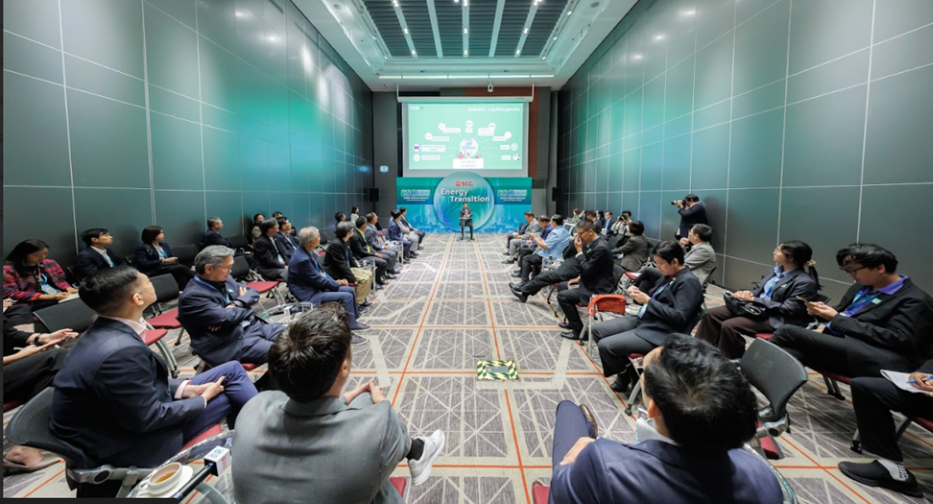
The discussions during the Opinion Panel reflected insights from experts across sectors, highlighting that Thailand is facing increasing pressure from global developments and emerging regulations such as CBAM and carbon standards. As a result, accelerating the transition to clean energy is no longer optional but a structural necessity. Experts emphasized that key challenges lie in the current energy system structure, regulatory frameworks, and market mechanisms, which still limit broad, competitive access to clean energy.
From a collaboration perspective, all sectors must work together in a more integrated manner. The public sector plays a critical role in enabling the transition by reforming policies and regulations to be more flexible and open, such as supporting Third Party Access (TPA), establishing fair electricity pricing structures, and developing carbon market mechanisms. Meanwhile, the private sector is expected to accelerate investments in clean energy technologies and infrastructure, including energy storage systems (ESS), green infrastructure, and regional power connectivity such as the ASEAN Power Grid, to enhance system reliability and efficiency.
To support and accelerate this transition, SCG plays a pivotal role in advancing the energy transition by leveraging its technological capabilities, innovation, and strong partnership network. This includes developing and adopting alternative energy, investing in low-carbon solutions such as CCUS and alternative fuels, and collaborating with government and partners on pilot projects to test and scale practical solutions. In addition, SCG supports the development of an enabling ecosystem that facilitates access to clean energy for industries and supply chain partners.
Key conclusions from the discussion
The transition toward clean energy in Thailand must be pursued through a systematic and coordinated approach, with the following priorities:
- Accelerating policy and regulatory reforms to create a more open, flexible, and competitive energy market that enables access to clean energy for all stakeholders, including small producers and industrial users
- Developing market-based mechanisms, such as carbon markets, electricity trading systems, and green finance instruments, to incentivize investment and manage long-term transition costs
- Investing in critical infrastructure for the future energy system, including energy storage (ESS), smart grids, and regional interconnections, to support the integration of renewable energy
- Promoting the deployment of advanced technologies such as SMR, hydrogen, and CCUS to expand decarbonization pathways, particularly in hard-to-abate sectors
- Building a “Green Ecosystem” that connects government, private sector, and financial institutions, while strengthening workforce capabilities and access to financing
- Driving a practical “Go Green” approach that balances energy security, affordability, and sustainability
Just Transition for SMEs
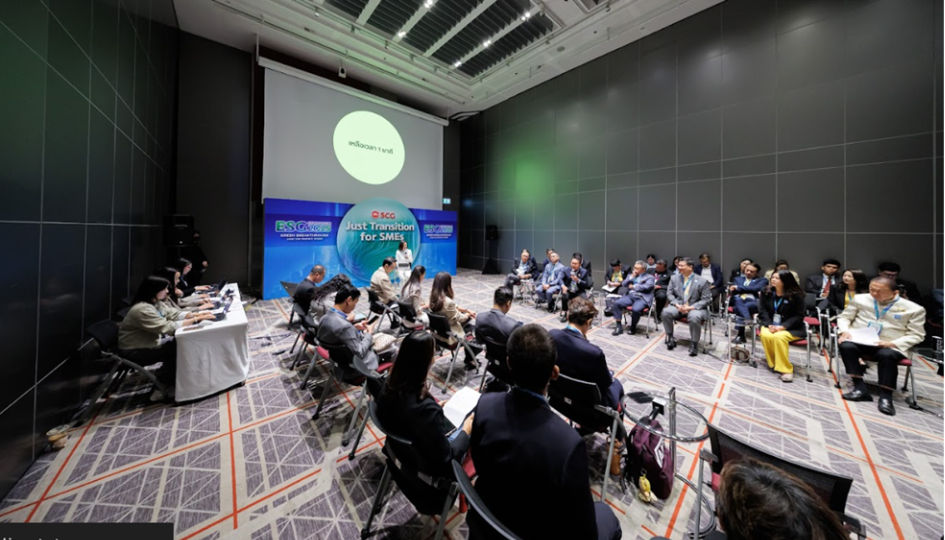
The discussions during the Opinion Panel reflected insights from experts across sectors, emphasizing that SMEs—forming the backbone of Thailand’s economy—are facing multidimensional challenges. These include intensifying competition, rapid technological change, and increasingly stringent ESG requirements. Key constraints remain in access to finance, knowledge, technology, and new markets. Experts consistently highlighted that a “Just Transition for SMEs” should go beyond compliance, focusing on systematically strengthening capabilities to enable SMEs to adapt, remain competitive, and grow sustainably.
From a collaboration perspective, stronger coordination between the public and private sectors is essential. The public sector plays a critical role in designing enabling policies and support mechanisms tailored to SMEs, such as regulatory simplification, establishing One Stop Service platforms for advisory and financing access, and promoting reskilling and upskilling in digital, innovation, and ESG capabilities. Meanwhile, the private sector can support SMEs by transferring knowledge, technology, and market access, as well as fostering collaborative ecosystems—such as clusters and value chain partnerships—to help SMEs integrate into higher-value markets domestically and internationally.
To support and accelerate this transition, SCG plays a significant role in empowering SMEs by leveraging its business and sustainability capabilities. This includes close collaboration with partners across the supply chain to enhance ESG knowledge, support decarbonization efforts, and transfer technology and innovation. SCG also helps create new business opportunities within the Green Value Chain. In addition, SCG can serve as a platform to connect collaboration among government agencies, financial institutions, and SMEs, thereby accelerating the transition in a practical and scalable manner.
Key conclusions from the discussion
The transition of Thai SMEs toward sustainability must be approached in a comprehensive and differentiated manner, with key priorities including:
- Developing integrated support mechanisms that address access to finance, knowledge, technology, and markets, tailored to different SME segments (e.g., micro, small, medium, tradable and non-tradable)
- Enhancing competitiveness through productivity improvement, value-added development, and adoption of digital and innovative technologies such as AI and digital transformation
- Advancing workforce development through reskilling and upskilling aligned with green and digital economy needs
- Promoting cluster-based and ecosystem approaches to enable SMEs to access shared resources, knowledge, and market opportunities
- Establishing practical support systems such as One Stop Service and stronger linkages with financial institutions to improve access to funding
- Driving Green Transformation to enable SMEs to integrate into Green Value Chains and meet evolving ESG requirements in global markets