Social and Community Development

SCG is committed to being an organization that actively contributes to sustainable social and community development. We operate our business while enhancing the quality of life for people in every area where we operate, as we believe that strong communities are the foundation of economic growth and a better quality of life.
We adhere to the principles of creating shared value with communities and responsibly managing social impacts by engaging in listening to the opinions, expectations, and needs of communities to develop projects that genuinely address their requirements.
SCG’s Commitments
- Responsible Business Practices
We integrate corporate social responsibility (CSR) into all aspects of our business operations, ensuring a balanced approach to economic growth while considering social and environmental impacts.
- Community Engagement
We emphasize building strong relationships with communities by providing opportunities for their participation in decision-making and project development that directly impacts them.
- Empowering Communities for Self-Sufficiency
We support community capacity-building initiatives to enable self-reliance and sustainable development.
- Innovative Solutions to Social Challenges
We leverage our expertise and resources to develop innovative solutions and projects that address long-term social issues.
Social and Community Development Management
SCG has a clear governance structure to ensure effective implementation of our social and community development initiatives:
- CSR Committee for Sustainable Development: Oversees and sets policies and guidelines on CSR activities for sustainable development.
- SCG Foundation: Focuses on human resource development with an emphasis on cultivating “talented and moral individuals.”
- Community Relations Department: implements activities to enhance the potential of communities around SCG’s establishments, improving their quality of life and fostering self-reliance.
Social and Community Development Strategies
SCG employs diverse approaches to drive impactful, long-term social and community development initiatives:
- Leveraging Expertise for Community Development: Utilizing knowledge and resources from both internal and external sources to enhance community capacity and promote self-sufficiency.
- Fostering Stakeholder Engagement: Encouraging participation from employees and stakeholders to create sustainable social value.
- Developing Innovative Solutions for Social Issues Creating new solutions to address community needs and resolve societal challenges.
- Developing Social Development Models and Expanding Results: Piloting community development projects and scaling up successful initiatives to broader communities.
SCG’s Four Key Areas of Community Growth
Restore Water, Reforest the Land
SCG supports community adaptation to environmental changes and resource shortages by learning from successful models such as the Huai Hong Khrai Royal Development Study Center in Chiang Mai and implementing careful forest restoration efforts.
One of the important projects is “Rak Phuk Pha Maha Natee”, which helps communities manage water sustainably through the construction of over 139,000 check dams to ensure sufficient water for consumption, use, and agriculture, along with restoring the ecosystem and biodiversity.

One of the important projects is “Rak Phuk Pha Maha Natee”, which helps communities manage water sustainably through the construction of over 120,000 check dams to ensure sufficient water for consumption, use, and agriculture, along with restoring the ecosystem and biodiversity.
Target for 2050
- Reforestation, restoration, and conservation of 3 million rai of forest
- CO₂ absorption of over 5 million tons per year
▶ Watch “Into The Better Land”, the story of Khao Yai Da community in Rayong Province, where forests, water, and the sea have been restored—bringing back livelihoods, opportunities, and smiles to the people. Link https://youtu.be/DYw1FM-B6gI?si=dLBGhditDLUAa0x_
Develop Stable Livelihoods
SCG is committed to enhancing income opportunities and reducing occupational inequality in Thailand through Q-CHANG, an online platform that connects skilled technicians with homeowners. The platform enables technicians to access job opportunities, earn stable incomes, and elevate their professional standards while fostering pride in their profession.
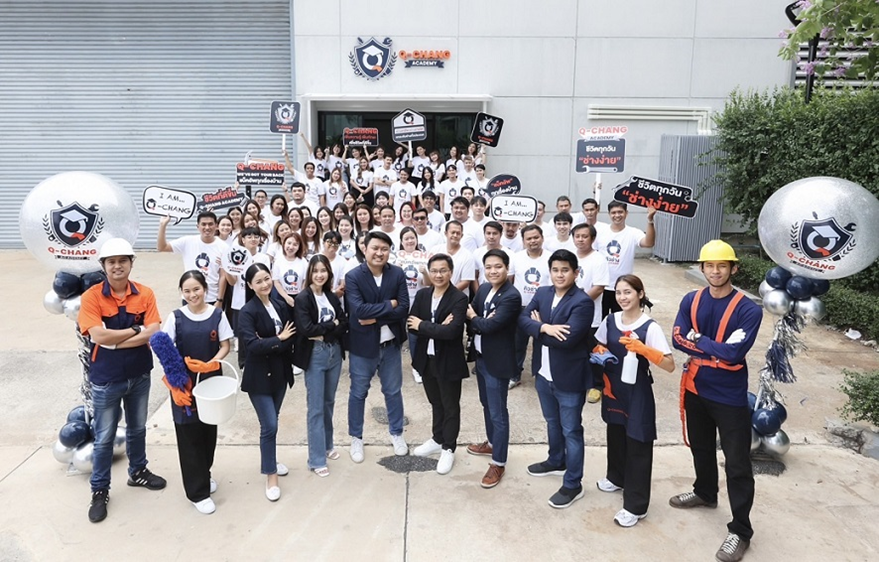
Building on this success, SCG has established Q-CHANG ACADEMY to comprehensively develop the capabilities of technicians within its network. The program covers technical skills (Hard Skills), service skills (Soft Skills), and business skills (Business Skills), aiming to cultivate a new standard of professional technicians capable of delivering high-quality services to homeowners nationwide. In addition, Q-CHANG ACADEMY collaborates with leading construction material brands to provide hands-on knowledge and product application techniques directly from manufacturers, ensuring that technicians continuously upgrade their skills in line with evolving construction technologies.
To support future workforce needs, the initiative also partners with five vocational institutions across Thailand, including Chitralada School, offering students in vocational and construction-related fields opportunities to undertake internships with Q-CHANG and transition into professional careers within the network.
Another testament to Q-CHANG’s success is its recognition in the Thailand’s Most Admired Brand 2025 survey, where it received an award in the construction materials category under the technician service platform segment—reflecting strong consumer trust and confidence nationwide.
Results as of the end of 2025
👷 Accumulated technicians on the platform : 3,836 persons
💼 Technicians getting work assignment 381 persons
📈 Average income increase: 13,700 baht/person
Promote Well-being
The disparity in healthcare services, especially in remote areas, makes access to medical treatment difficult. SCG has developed the “Digital Doctors, Remote Patient Care” project using DoCare innovation to help people access healthcare services more conveniently.

Results:
- Helped reduce travel time and expenses for more than 6,400 patients
- Helped reduce patient congestion in hospitals and enabled doctors to care for patients more efficiently.
- Currently, there are 23 hospitals participating in the network, with 10 receiving funding support from the Board of Investment (BOI).
“Digital Remote Doctors” – Healthcare innovation for accessible treatment
Example from Tha Wung Hospital, Lopburi Province, which uses this technology to develop the community’s public health system.
▶ Click to watch the video
Support a Low-Carbon Society
SCG is driving the transition of the agricultural sector toward a low-carbon society, while enhancing farmers’ incomes and strengthening their capacity to adapt to climate change. In collaboration with Saraburi Province, SCG has initiated the Low Carbon Agriculture project under the Saraburi Sandbox.
The project aims to reduce greenhouse gas emissions from rice cultivation, a major source of methane in the agricultural sector, by promoting the Alternate Wetting and Drying (AWD) technique. This approach improves water management efficiency, reduces water usage by 25–40%, and lowers production costs by 10–20%. It also strengthens rice plants, enhances nutrient absorption, and improves overall crop quality.
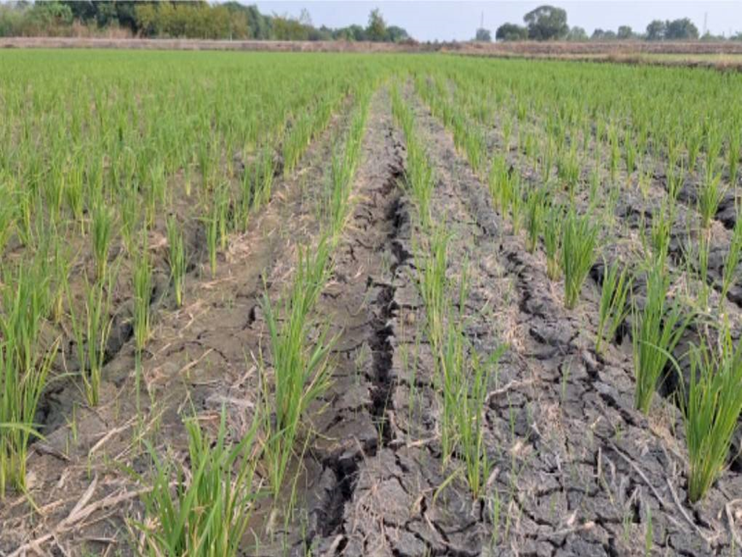
Beyond knowledge transfer, the project provides farmers with essential equipment and technologies to ensure effective and standardized implementation. Currently, the initiative covers seven districts, spanning over 1,118 rai, with 62 participating farmers.
To create added value, the project collaborates with the Tha Chang Community Rice Center Enterprise in Sao Hai District, Saraburi Province, to develop “eco-friendly rice” products cultivated using the AWD method. These include brown rice (RD69 variety) and white rice (RD79 variety), which address health, environmental, and income needs.
This initiative serves as a model for integrating greenhouse gas reduction, natural resource conservation, and sustainable grassroots economic development, aligning with the nation’s pathway toward a low-carbon society.