
Inclusive Green Growth
SCG continuously implements and reviews its sustainable development strategies, integrating business operations with environmental, social, and governance (ESG) considerations. To accelerate the green transition in line with the Inclusive Green Growth approach and achieve net-zero greenhouse gas emissions by 2050, SCG employs various strategies. These include investing in green businesses, developing low-carbon product innovations and technologies, increasing clean energy usage, and restoring ecosystems. SCG fosters collaboration with all sectors, including government, private, and public entities, to achieve these goals.
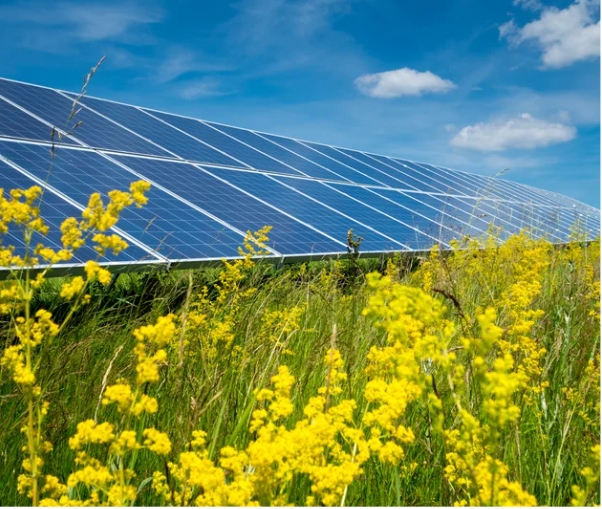
Net Zero 2050
The transition from fossil fuels to clean energy and the leader in low-carbon cement, we are continuously pushing forward with innovations, researching and developing advanced technologies to achieve Net Zero.
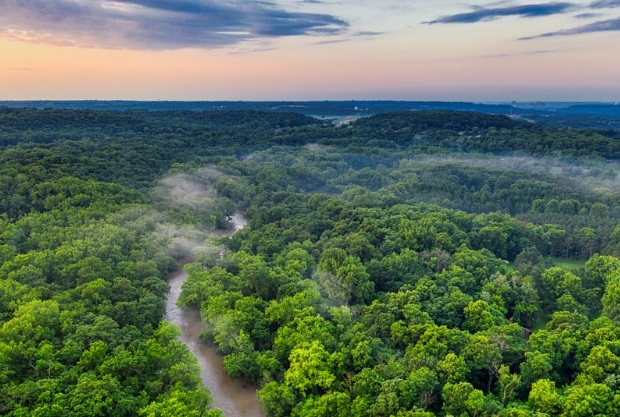
Nature Positive
Improving the eco-efficiency of operations (Operation Eco-Efficiency) by using circular economy and biodiversity conservation, water resource restoration, forest and ecosystem restoration, and adaptation to reduce physical risks.
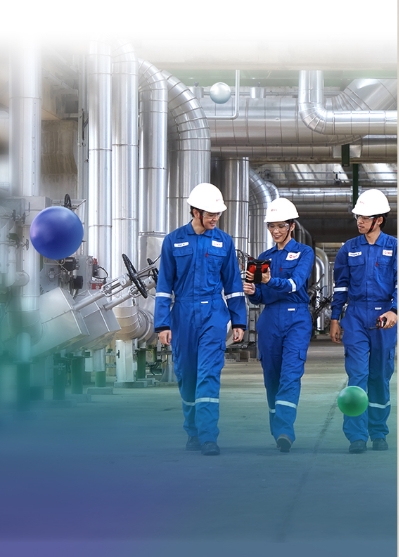
Inclusive Society
Promote safety and well-being, human rights, diversity, equality and participation (human rights, diversity, rights and inclusivity, DEI), as well as the transition to a fair low-carbon economy and sustainable living development.

Materiality
SCG manages its sustainability issues by collecting and prioritizing them in connection to their relationship with business operations.Materiality
SCG manages its sustainability issues by collecting and prioritizing them in connection to their relationship with business operations.
Net Zero Transition
- Manage risks and opportunities related to the Net Zero transition.
- Formulate plans for the reduction of Scope 1 and 2 GHG emissions in accordance with SBTi and the organization’s transition plan.
- Prepare for carbon taxes and volatile energy costs.
- Develop low-carbon products and solutions to enhance long-term competitiveness.
- Manage Scope 3 GHG emissions and foster collaboration with suppliers to reduce carbon emissions and ensure preparedness for climate change-related risks.

Climate Resilience to Physical Risks
- Assess and manage risks arising from floods, droughts, and extreme temperatures that affect operations.
- Utilize climate scenario analysis for long-term planning, resource allocation, and financial planning.
- Enhance the Business Continuity Management (BCM) system to ensure business continuity during emergency situations.
- Improve the climate resilience of the infrastructure and work systems.
Circular Economy
- Manage natural resources efficiently across the value chain to mitigate risks associated with unsustainable resource use and increased waste generation.
- Apply circular economy principles to process design and waste management to minimize impact on ecosystems and increase resource recovery and reuse.
- Reduce waste, particularly plastic waste, and increase reuse and recycling rates throughout operations.
- Strengthen resource security, reduce regulatory risks, and meet stakeholder expectations in accordance with international frameworks, such as the TNFD framework.

Just Transition
- Manage impacts on workers and communities during the transition to a low carbon economy.
- Support access to green finance and new business opportunities for business partners and SMEs.
- Drive a circular economy and green product markets.
- Promote fairness, transparency, and standard elevation across the value chain.

Digital Innovation & Cybersecurity
- Utilize AI, Automation, and IoT as fundamental enablers to elevate efficiency and sustainability initiatives, such as the advancement of Net Zero, Nature Positive, and Inclusive Society.
- Strengthen cybersecurity and data governance, which are the foundation of reliable data management.
- Employ the ESG Data Platform as the core infrastructure for collecting, analyzing, and supporting strategic decision-making and sustainability governance.
- Develop digital skills among personnel to ensure long-term readiness in leveraging technology as a basis for risk management and driving the transition to a low-carbon economy.
Performance
SCG has published the sustainability report every year since 2001 by presenting the performance in 3 core business units, namely Cement-Building Materials Business, Chemicals Business, and Packaging Business. The selection of Sustainability Performance information included in this report is based on what is determined by SCG’s management to be responsible, relevant and of value for its stakeholders when measuring sustainability performance.
 Performance 2025
0
/
0
million tons carbon dioxide / %
GHG Emissions Reduction
(compared with the base year 2020)
0
%
Alternative Fuel
0
/
0
Cases
Number of Fatality Work-Related Injury from Workplace, Travelling and Transportation
(Employee)
(Contractor)
(Contractor)
0
Cases/1,000,000 Hours Worked
Occupational Illness Frequency Rate - Employee
0
% of revenue from sales
Green Choice-labelled products, services, and solutions
0
% of revenue from sales
High Value Added Products and Services (HVA)
0
/
0
petajoules / %
Energy Consumption Reduction
(compared with BAU at the base year of 2007)
0
/
0
million baht / %
Environmental Expense and Investment
0
/
0
Cases/1,000,000 Hours Worked
Lost Time Injury Frequency Rate
(Employee)
(Contractor)
(Contractor)
0
Million Baht
Social Contribution
0
/
0
million baht / % of revenue from sales
Research and Innovation Spending
0
% of revenue from sales
Green Choice-labelled products, services, and solutions
0
%
Alternative Fuel
0
%
Recycled Water
0
Cases/1,000,000 Hours Worked
Occupational Illness Frequency Rate - Employee
0
persons
Logistics Drivers Trained from “SCG Skills Development School”
0
% of revenue from sales
Green Choice-labelled products, services, and solutions that provide direct customer value
0
items
Carbon Label Certified
0
ton
Hazardous and Non-Hazardous Waste to Landfill (For Thailand Operations)
0
/
0
million tons carbon dioxide / %
GHG Emissions Reduction
(compared with the base year 2020)
0
%
Females in all management positions
0
Cases
Human rights violation
0
items
Carbon Label Certified
0
Million Baht
Green Procurement Purchased
0
/
0
petajoules / %
Energy Consumption Reduction
(compared with BAU at the base year of 2007)
0
%
Alternative Fuel
0
Units
Number of Check Dam
0
households
Beneficiaries from the Community Water Management Program
0
% of procurement spending
Suppliers Being Conducted Environment Social and Governance (ESG) Risk Assessments
0
million baht
Contributions to Organizations
0
/
0
million baht / %
Environmental Expense and Investment
0
ton
Hazardous and Non-Hazardous Waste to Landfill (For Thailand Operations)
0
persons
Reduce Social Inequalities (cumulatively from 2021-2030)
0
Million Baht
Social Contribution
0
% of revenue from sales
High Value Added Products and Services (HVA)
0
% of revenue from sales
Green Choice-labelled products, services, and solutions that provide direct customer value
Feature Stories
Sustainable Development in Action

SCGP Recognized for Global Sustainable Growth, Ranked Top 1% in S&P Global for Containers & Packaging, Listed in MSCI Global Small Cap Indexes



SCG
NEWS CHANNEL
News updated from SCG and affiliate.

SCG incorporates 315 coalitions of public, private sectors, women, and rising generations to tackle global crises, gearing ESG in ASEAN,

SCG listed in the DJSI World for 18 consecutive years

SCG accelerates ESG stance in response to Thailand’s reopening

SCG Chemicals Partners with 7-Eleven to Introduce Reusable Durable Bag

SCG Announces Q3/2021 Operating Results, Utilizing ESG

SCGP investing in new production base in Northern Vietnam

SCG Wins 10 Awards at Thailand Corporate Excellence Awards 2021

USTDA Supports Electric Vehicle Transition in Thailand

RIL Industrial Estate of SCG Chemicals becomes Thailand’s first-ever industrial estate

SCG showcases paper innovation, supporting eco-friendliness at APEC 2022 Thailand

ESG Symposium 2022: Achieving ESG and Growing Sustainability
ESG Highlight

ESG Symposium 2026 Champions “ASEAN in Action,” Uniting Global and ASEAN Leaders to Accelerate an Inclusive Green Transition Toward a Competitive and Sustainable Region

“Love the sea” is operated by Earth Agenda, in cooperation with The Department of Marine and Coastal Resources, Ministry of Natural Resources and Environment, the faculty of Veterinary Science, Chulalongkorn University and SCG. We bring SCG 3D printing technology to create artificial reefs as coral grounds and for marine habitats.

Nature Positive x Transforming Shrimp Ponds into Mangrove Forests

Forest Bathing

“Forest-Loving Youth” Project, Saraburi – Module 1

“Forest-Loving Youth” Project, Saraburi – Module 2

SCG Saraburi Sandbox

Deep Dive into the Singapore Model: From Carbon Tax to a Sustainable City We Need to Know

The power of collaboration drives the circular economy

The winner of SCG Safety 24 hrs. clip challenge (From Siam Kraft Industry Co., Ltd. – SCGP)
The worker's involvement program to enhance both in-the-job and Off-the-job safety awareness of 2023

Hybrid Structural Cement

“NZAP”: SCG Launches an Entrepreneur Development Program to Support the Transition to a Low-Carbon Society, Enhance Competitiveness, and Build Resilience to Climate Change

Thailand’s First Hybrid Structural Cement

Hybrid Structural Cement Helps Reduce Carbon Dioxide Emissions

SCG Green Mining: Environmentally Responsible Mining

SCG Green Mining x Department of Primary Industries and Mines (DPIM)

SCG Green Mining x Faculty of Engineering, Chulalongkorn University

Growing Trees to Mitigate Global Warming, Connecting Communities, Expanding Green Space
Forest Restoration in Ban Ko, Lamphun

ESG Net Zero Conduction Business Amid Climate Change

SCGC Launches “CHILLOX,” Thailand’s First Energy-Saving Solution for Cold Storage Warehouses, in Collaboration with SCGJWD for Real-World Testing, Advancing Green Logistics

Love the sea- Cleaning homes for marine animals and building coral reefs on Koh Larn

Nature Positive - Not just about stopping destruction, but restoring it to be better

Receive energy from the forest with the "Forest Bathing" activity.

The Company’s commitment in operating the business while taking into account the 5 major goals of UN’s Sustainable Development Goals (SDGs)




RATING AND STANDARD AGENCY





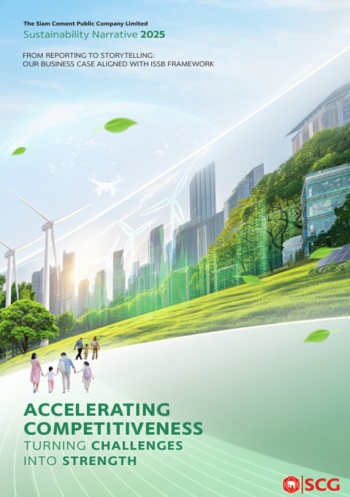
Sustainability Report 2025
EMPOWERING INCLUSIVE GREEN GROWTH TO ACHIEVE NET ZERO 2050